For dealers and importers who've outgrown the lot
The lot is full and the next container has landed.
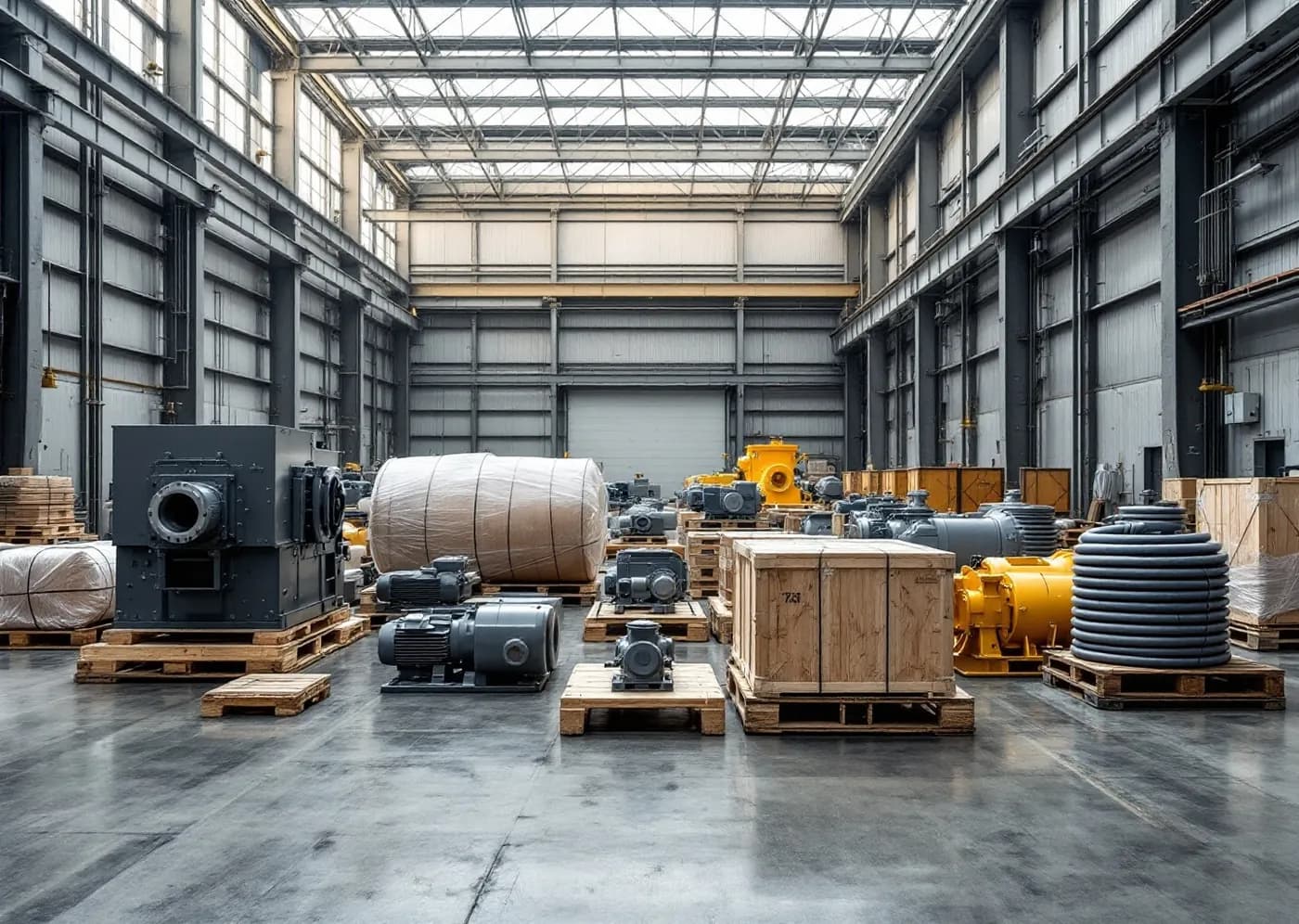
Overflow and staging for equipment dealers, OEM distributors and importers — crated and skidded machinery, parts and attachments indoors on a heavy floor, instead of another season sitting out in the weather.
Does Rolls Right store equipment and machinery?
Yes. Rolls Right stores crated, skidded and palletised machinery, parts, attachments and components for equipment dealers, OEM distributors and importers, in Calgary and Vancouver. The Calgary warehouse at 4770 68 Avenue SE has six dock doors, a 47 by 35 foot column grid and 28-foot clear height, which suits dense and heavy product. Calgary is dock-loaded, and machinery that arrives on its own wheels goes to the Vancouver facility at 3200 E Broadway, which has four grade-level doors alongside its twenty docks. Rolls Right also runs flat deck and power-tailgate equipment for delivery to sites without a dock.
Calgary facility
- Facility size
- 100,000+ sq ft
- Building class
- A-Class warehouse
- Zoning
- I-G (Industrial General)
- Industrial park
- East Foothills
- Clear height
- 28 feet
- Dock doors
- 6
- Sprinklers
- ESFR, rated for high-pile storage
- Security
- 24/7 CCTV and overnight security
- Climate
- Heated — make-up air and gas unit heaters
- Lighting
- Motion-sensor
- Column grid
- 47 ft × 35 ft
- Equipment
- Electric forklifts, on-site charging
- Parking
- Common stall parking on site
- Transit
- Served by Calgary Transit
The problem
What usually goes wrong.
Dealers outgrow their lots. It happens on a predictable cycle — the pre-season order lands, the yard is already full, and machines that should be presentable to a buyer spend a winter outdoors instead. Importers have the same problem in a different shape: containers arrive on the sailing schedule, not on the schedule the dealer network can absorb them.
Indoors on a heavy floor, in a wide-bay building, is worth more than it costs on this product. It is not the storage rate that hurts, it is corrosion, weather damage, and a machine that has to be cleaned up before it can be sold.
Be straightforward with us about the form it arrives in — crated, skidded, on its own wheels — because that decides the building rather than the price.
Capabilities
What we run for equipment
- Crated, skidded and palletised machinery, held indoors on a heavy floor
- Parts, attachments and components, down to pallet level
- 47 ft × 35 ft column grid, so wide bays and room for awkward lengths
- Container de-stuffing and drayage on our own chassis, port and rail ramps
- Rolling stock at the Vancouver building, which has four grade-level doors
- Flat deck and power-tailgate delivery to dealers and sites with no dock
- Short-term overflow through a pre-season peak, on terms measured in months
What we'll actually claim
No borrowed credibility.
Excavators and forklifts are already sitting in Rolls Right buildings, which is the reason this page exists — but that business is on the Vancouver floor, and it would be misleading to point at it as Calgary proof. For Calgary the honest argument is the spec: 28-foot clear, a 47 by 35 column grid and a floor built for dense product. Walk it before you commit.
Brands that trust us



















Where it runs
Served from Calgary and Vancouver.
Purpose-built space in the Foothills industrial corridor, with our own trucks running the Calgary–Vancouver lane six days a week.
FAQ
Questions we get asked
Can I drive a machine straight into the building?
In Vancouver yes — four grade-level doors alongside twenty docks. Calgary is dock-loaded, so rolling stock is routed to Vancouver, and crated, skidded and palletised machinery loads through a Calgary dock without any trouble. Tell us how it arrives and we'll route it to the right building first time.
We only need it through the pre-season peak. Is that worth your while?
Yes, and it's a normal pattern here. Short-term overflow on terms measured in months is exactly what transient space is for. A dealer who fills space for four months every year is good business, not an inconvenience. It is also the cheaper way to solve the problem: expanding the lot means land, paving and permits that sit on the books all year, while overflow is a monthly bill that ends when the season does.
We swap whole fleets twice a year. Can you handle both directions at once?
Yes. A swap is receiving and load-out planned into the same week: the incoming line goes into racking while the outgoing one stages at the dock, so your yard never holds both fleets at once. Tell us the timing and the counts and we will plan the week around them.
Can you handle the container end for imported machines?
Yes. We pull the container on our own chassis from the port or the rail ramps, strip it, and put the product away. That keeps the box moving back before demurrage starts, and it's one company for the drayage, the de-stuff and the storage. The same arrangement takes the surge when a price increase has you bringing the season in early: transient space absorbs the extra volume until the network can sell it down.
Our parts department has outgrown the store. Can you hold parts inventory?
Yes, down to pallet level. Attachments, components and slow movers hold here under your account, and the space beside the counter goes back to stock that actually turns. Restocking runs on our own trucks, on a schedule you set.
Can you stage recall or warranty campaign kits for our dealers?
Yes. Kits land in one wave, hold under your account, and release as the campaign calls them up, and delivery runs on our own trucks across Western Canada, including the Calgary–Vancouver lane six days a week.
Can you deliver to our dealer network or to a customer site?
Yes. We run flat deck and power-tailgate equipment on our own fleet, which covers most delivery points including sites with no dock. Tell us the destination constraints and we'll confirm the equipment before quoting.
What about fluids, batteries or anything classed as dangerous goods?
Case by case. Send the class and the SDS and you'll get a straight yes or no. Machinery often travels drained, and whether it does changes the answer, so it's worth telling us up front.
Get a quote
Tell us what you move.
Every line itemised and back inside 48 hours.
Tell us what you move.
Pallet count, how often it turns, where it ships. A real number back inside 48 hours, and a straight answer about whether we're the right building.